Lean UX workshop—BMO Financial Group
Framing the problem
The project began with a clear challenge: the IVR roadmap lacked alignment. We needed to understand the business problems, surface user needs, and decide which ideas were worth pursuing.
Approach
I facilitated a Lean UX workshop with 10 participants over 2–4 hours, mapping assumptions into hypotheses and prioritizing solutions.
Recommendations included:
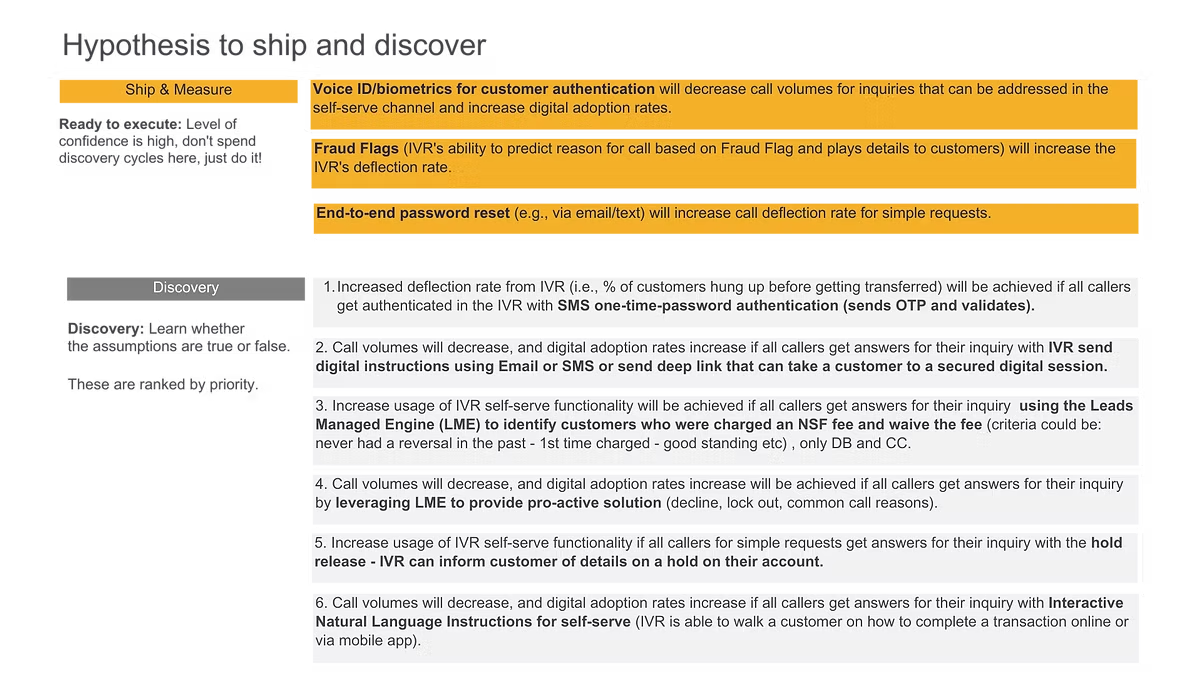
- Creating stories for hypotheses that were ready to ship
- Updating the phase 0 roadmap to explore whether certain hypotheses still made sense through discovery
Outcome
1. Business Problem
What problem does the business have that you're trying to solve? (Hint: consider your current product/service and how they deliver value.)
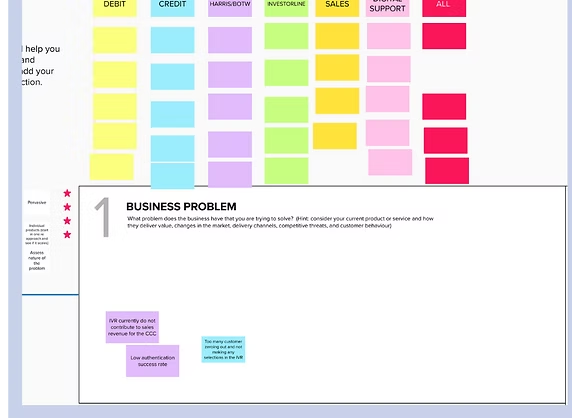
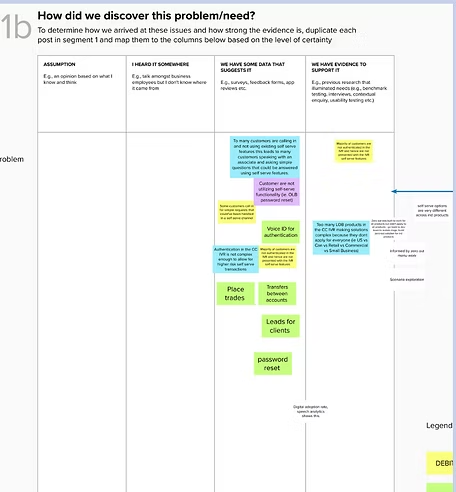
1b. Business Problem
How did we discover this problem/need? Sort problems into categories: Assumption, I heard it somewhere, We have some data that suggests it, We have evidence to support it.
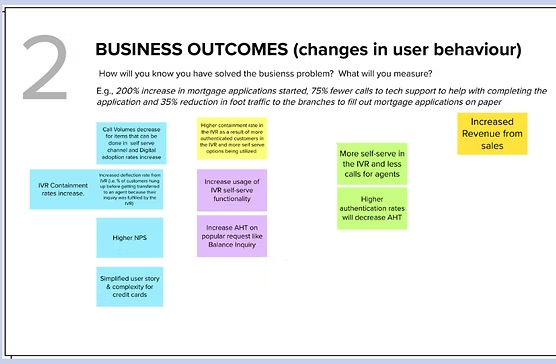
2. Business Outcomes
How will you know you have solved the problem? What will you measure (e.g., 75% fewer calls)?
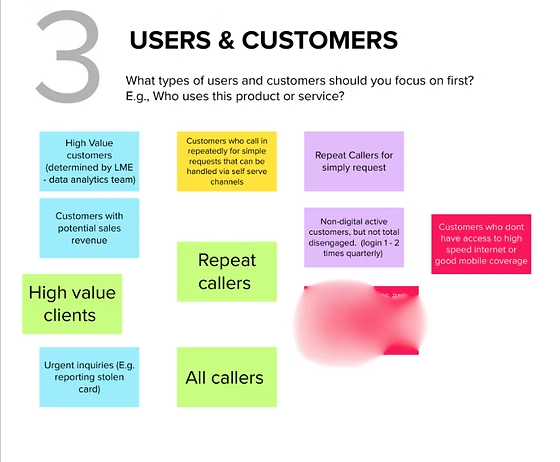
3. Users & Customers
What types of users and customers should you focus on first (i.e., who uses this product or service)?
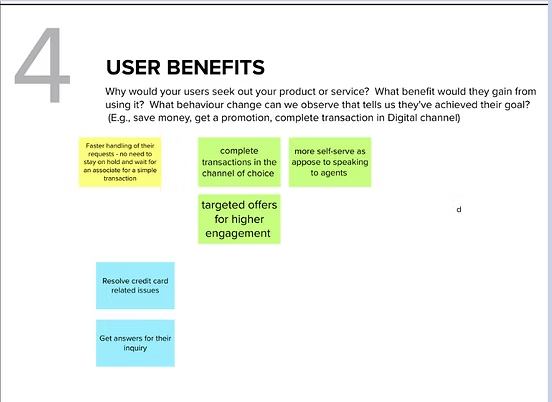
4. User Benefits
Why would your users seek out your product/service? What benefit would they gain? What behaviour change tells us they've achieved their goals?
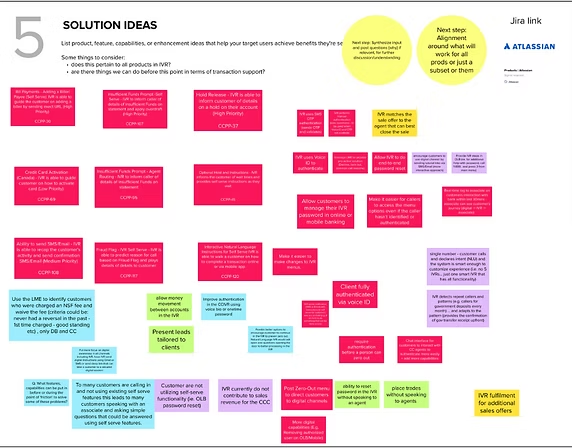
5. Solution Ideas
List product, feature, capability or enhancement ideas that help your target users achieve benefits. Does this pertain to all products in IVR? Are there things we can do earlier in terms of transaction support?
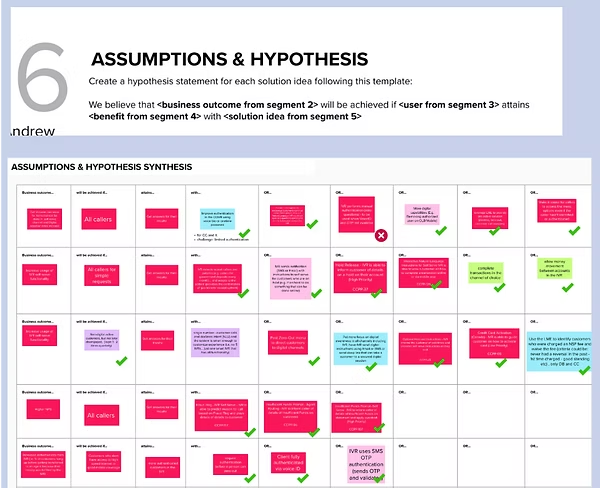
6. Assumptions & Hypothesis
Create a hypothesis statement for each solution idea: We believe that <business outcome> will be achieved if <user> attains <benefit> with <solution idea>.
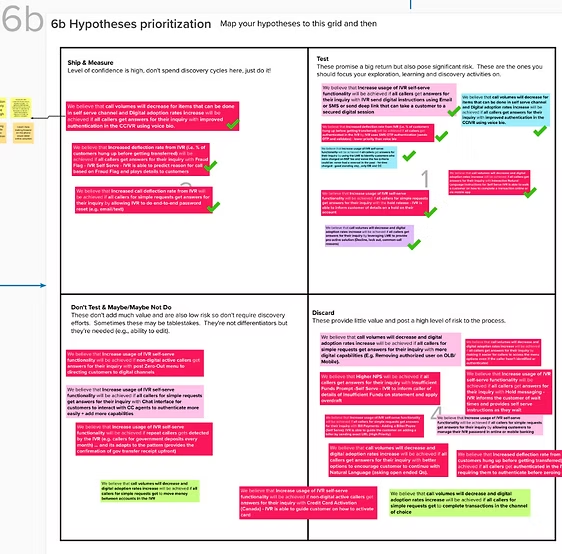
6b. Hypothesis Prioritization
Map your hypotheses to the grid: Ship & Measure, Test, Don't Test & Maybe/Maybe Not Do (low value, low risk), Discard.
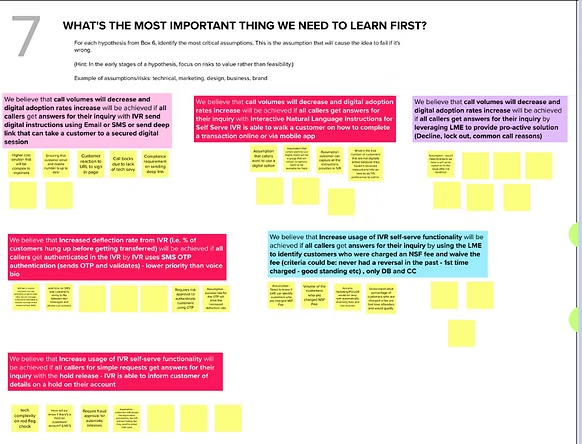
7. Most Important Thing We Need to Learn First
For each hypothesis, identify the assumption that will cause the idea to fail if it's wrong. In early stages, focus on risks to value rather than feasibility.
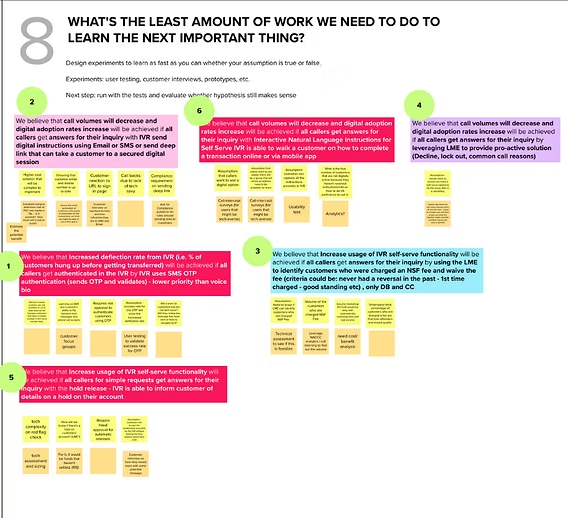
8. What's the Least Amount of Work Required to Learn It?
Design experiments to learn as fast as you can whether your assumption is true or false: user testing, customer interviews, prototypes. Next step: run the tests and evaluate whether the hypothesis still makes sense.
Retrospective
What worked
- Strong facilitation kept the group engaged
- Prompts guided participants to think broadly
- Participants provided useful input and discussion
- Supplemental note-taking captured valuable details
Challenges
- The concept of "transaction guidance" wasn't clear to participants
- Some solutions reflected existing biases rather than fresh ideas
- Limited time constrained exploration
- Differentiating business vs. user problems proved difficult
Opportunities
- Start sessions with more meaningful context-setting
- Research participants' perspectives in advance to better tailor prompts
- Involve technical stakeholders at the right stage
- Strengthen facilitation prep with clearer framing for the group