From dead ends to clear paths: How I redesigned a chatbot fallback for BMO Assist
The challenge: Help users succeed on their first try
BMO launched a new chatbot, BMO Assist, to support everyday banking. With 760,000+ users and 1M+ sessions, traffic was strong. But half of those chats ended in failure.
When the bot wasn't confident, it said: "I'm sorry, I didn't understand that." That left customers stranded without guidance or next steps.
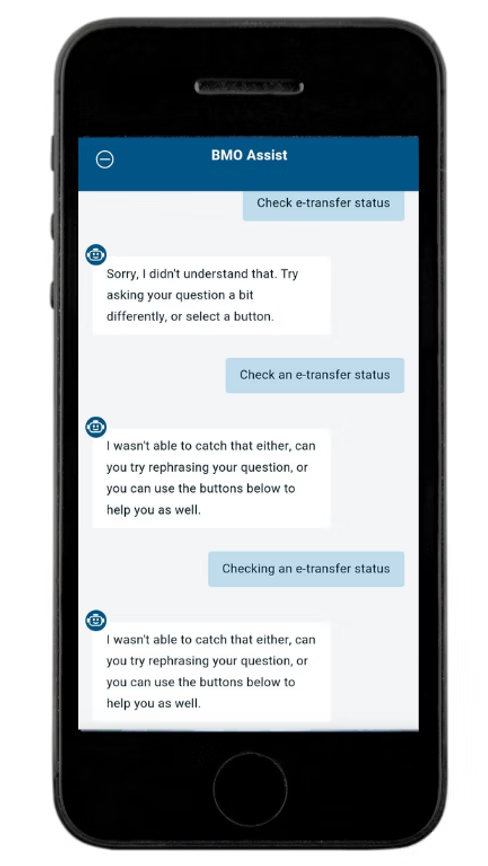
The problem: fallback was a poor user experience
While the long-term plan was to improve intent recognition through training, I proposed a content-led solution that could help immediately:
"What if fallback wasn't the end of the conversation, but, instead, helped them drive forward?"
That's how the fall-forward model was born.
The goal: prioritizing outcomes over AI accuracy
We set clear targets to shift focus from precision to progress:
- Raise the response success rate from 45% to at least 80%.
- Reduce exits after fallback.
- Improve positive feedback.
- Define success in terms of customers completing tasks, not just the AI guessing right.
My approach: turn fallback into fall-forward
I owned the content strategy for a new model that gave customers choices instead of dead ends.
Create options, not apologies
Short acknowledgement → "Try one of these" → 2–4 clear CTAs → safe escalation.
Design a scalable CTA system (300+ options)
- Verb + noun → "Lock card"
- Noun only → "Account balance"
- Question → "Why am I receiving alerts?"
Work across functions
- With PM: set new KPIs.
- With design: tested fit within UI.
- With engineer/QA: spec'd behaviour and edge cases.
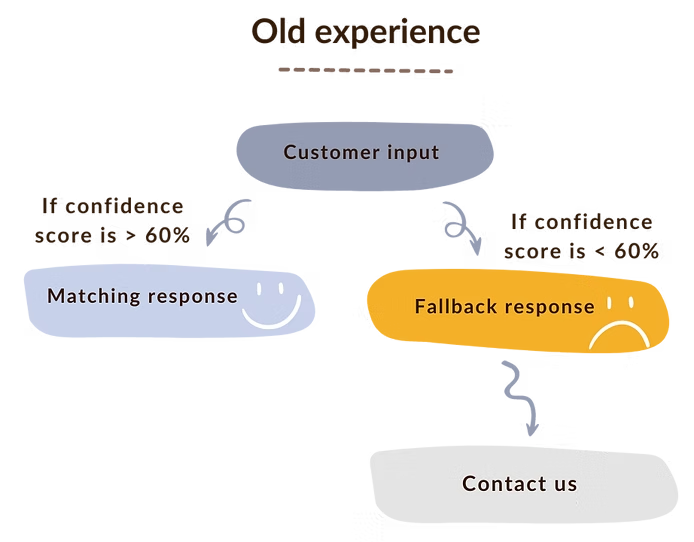
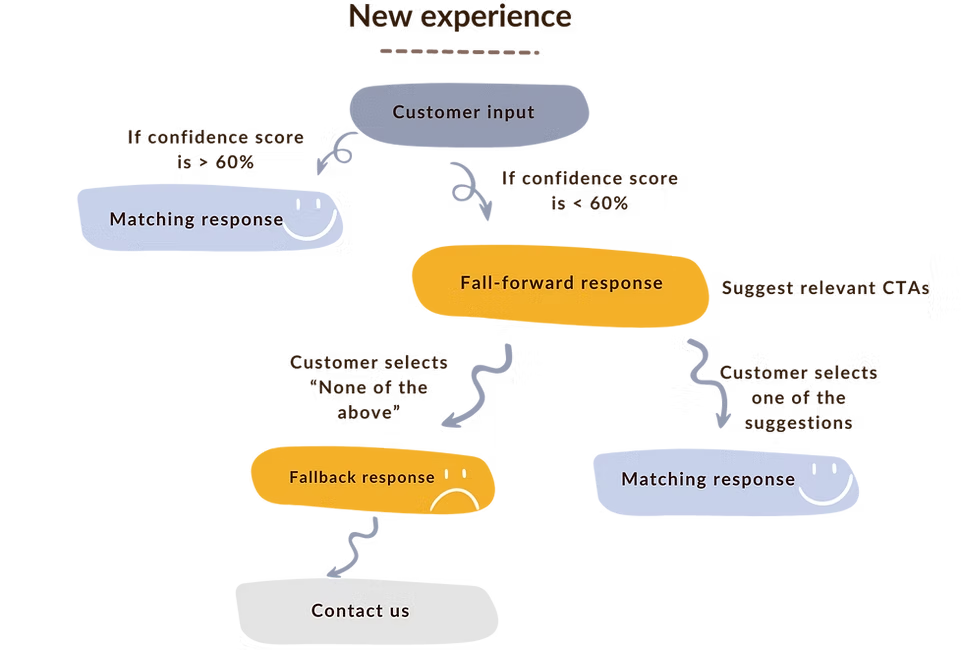
Real examples
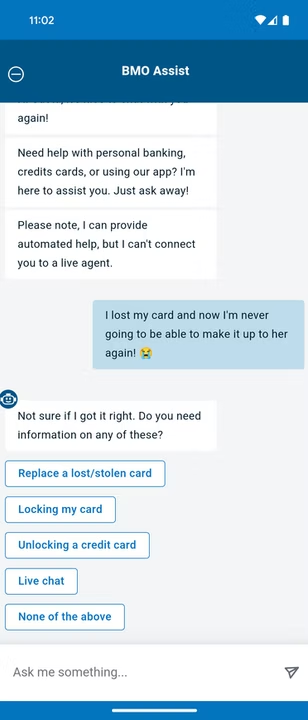
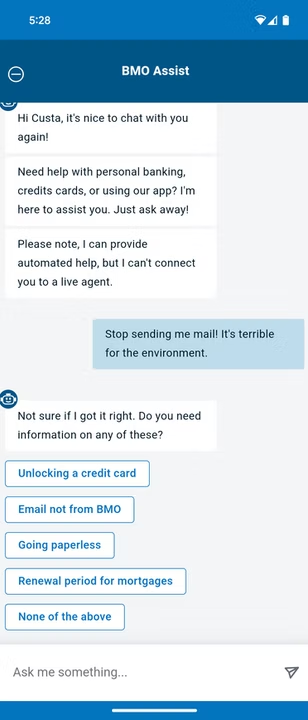
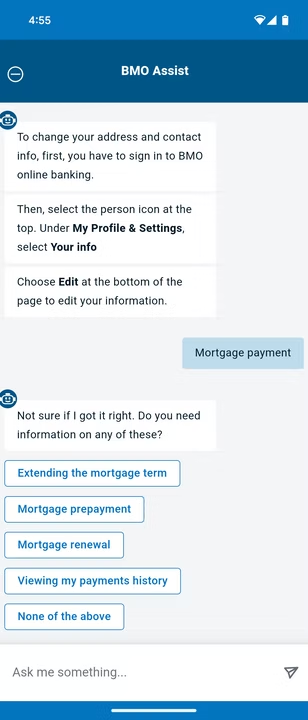
The results? Users didn't just stop at fallback. They moved forward.
Within the first week of launching the Fall-Forward Model, the chatbot's response success rate jumped from 45% to 86.5%—nearly doubling its effectiveness overnight.
Why it matters: building trust in a new channel
For many people, BMO Assist was their first time trying digital self-serve with the bank. A poor fallback would have eroded confidence quickly. By replacing a dead end with clear choices, we made the channel feel more reliable and worth coming back to.